
NEW WEBSITE FOR THE NDACC-FRANCE PROJECT
The NDACC (Network for Detection of Atmospheric Composition Change) project is an international network for long-term monitoring of the stratosphere and upper troposphere, set up in 1991 and based on observations made at various sites around the world. Its objectives are to detect changes in chemical composition and temperature of natural or anthropogenic origin, to study the interactions between chemistry and climate, and to validate the long-term observations of the same parameters by the many satellites that have since been put into orbit. The French activities make up the NDACC-France Observation Service of the CNRS/INSU, coordinated at national level by the Observatory of the University of Versailles Saint-Quentin.
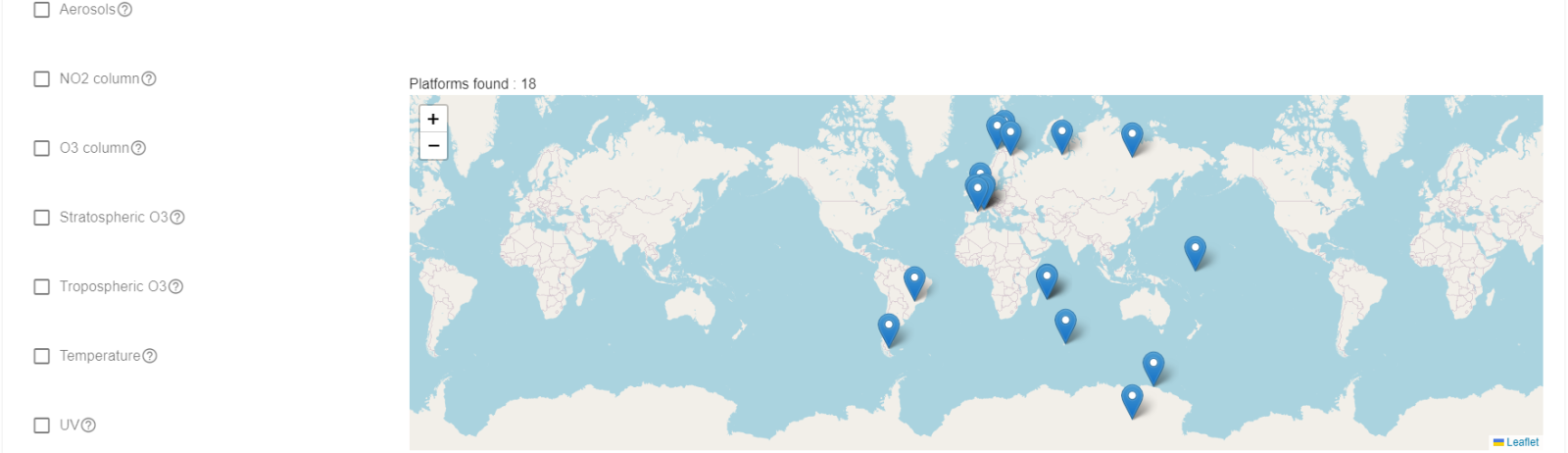
Historically, NDACC-France SNO data was available from the AERIS/ESPRI CDS, formerly ETHER. Today, the new NDACC-France website has been designed along the design of sites belonging to the AERIS cluster. It offers the following functionalities
- Presentation page for each station.
- Search form for NDACC France measurements by criteria.
- File download (ames+hdf).
- Interactive display interface for each instrument.
In addition, an NDACC France data display service is currently being developed and will be gradually deployed on the site.


