The June 2026 heatwave observed by the ACTRIS, ICOS and IAGOS research infrastructures and the AERIS atmospheric data centre
Background:
The heatwave of June 2026 stood out as a historic weather event due to its early onset, intensity, scale and duration. Beginning on 17 June, it rapidly shattered hundreds of temperature records across France, with daytime temperatures exceeding 40 °C in many regions and exceptionally hot nights, placing much of the country on red alert. Beyond the meteorological records, this event highlighted the vulnerability of health services and the population to extreme heat, whilst illustrating the accelerating effects of climate change. This heatwave once again underscores the increasing frequency and intensity of extreme events, reinforcing the need for policies to adapt to climate change and reduce greenhouse gas emissions.
This unprecedented heatwave was observed by various French atmospheric research infrastructures – ACTRIS, IAGOS and ICOS – and by the AERIS atmospheric data centre at IR DATA TERRA.
Satellite observations
Geostationary satellites reveal a lack of cloud cover over Europe, thereby facilitating the development of the heatwave.
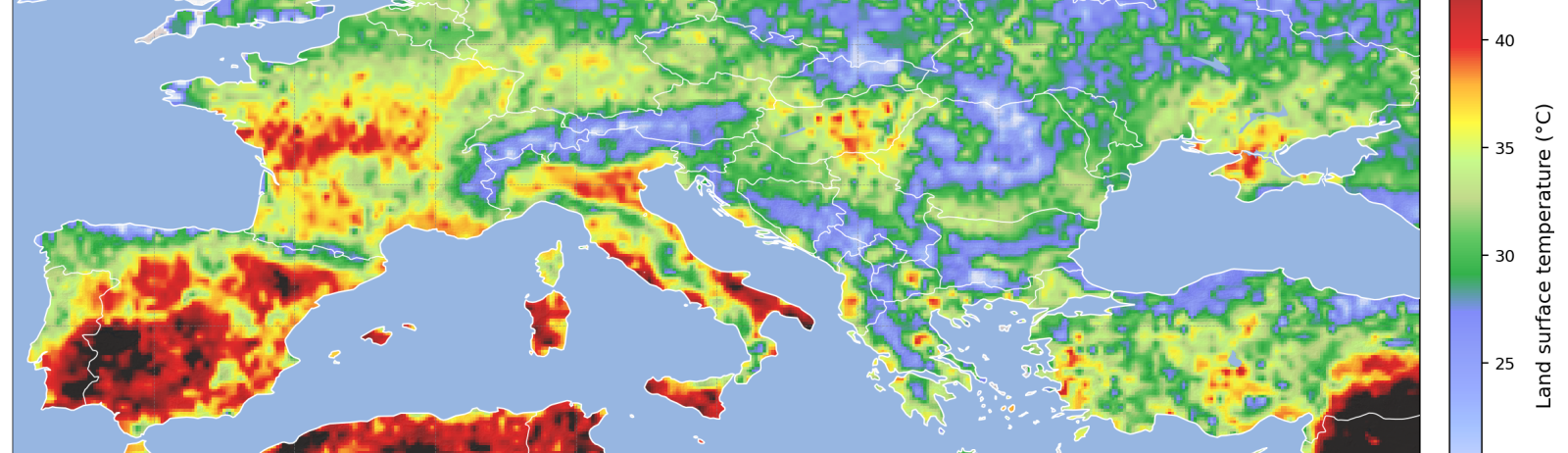
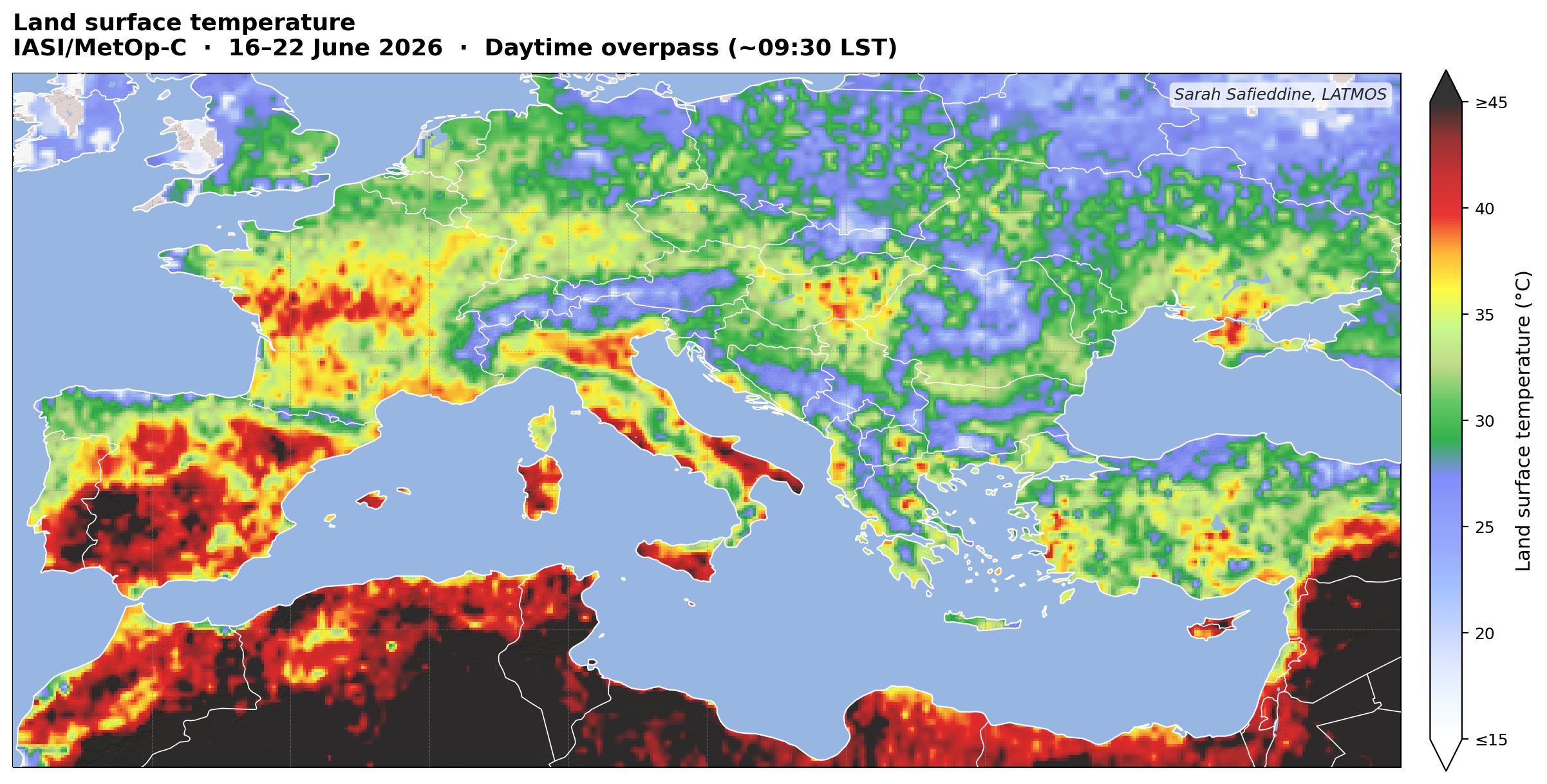
Thanks to its infrared measurements of the atmosphere, IASI (Infrared Atmospheric Sounding Interferometer) enables the monitoring of changes in air masses, temperature, humidity and certain atmospheric gases, providing essential data for analysing and documenting extreme events such as the heatwave of June 2026. Figure 2 shows the spatial variation in surface temperature across the European continent between 16 and 22 June, illustrating the development of the heatwave across south-western Europe.
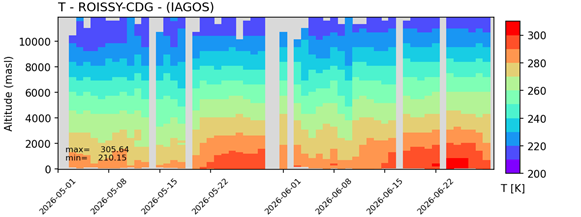
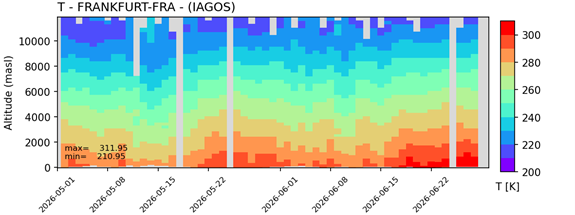
IAGOS observations from a commercial aircraft
The figure shows the temperature gradient between the surface and an altitude of 11 km, as measured by commercial aircraft equipped with the IAGOS research infrastructure – an Air France aircraft based at Roissy CDG in Paris, and a Lufthansa Group aircraft based in Frankfurt. Two successive heatwaves are visible between late May and June 2026, with a slight time lag between Paris and Frankfurt due to the atmospheric blocking pattern shifting eastwards. The high temperatures are found in a fairly deep atmospheric layer extending to over 3 km, very similar to the 2003 heatwave (Tressol et al. 2008). One must ascend to an altitude of 8 km for the temperature gradient associated with this heat dome to no longer be visible.
In-situ observations
Measurements were also taken from the ground by several stations belonging to the ACTRIS and ICOS research infrastructures.
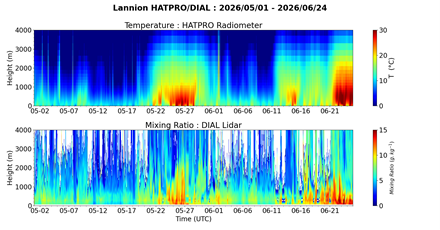
Data collected by the HATPRO radiometer and the DIAL Lidar of the national ‘Moyens mobiles’ instrument, installed in Lannion, reveal a marked vertical extent of heatwaves between May and June 2026 (Figure 4). The graphs show a correlation between rising temperatures (up to 30 °C at the surface) and variations in the water vapour mixing ratio, with significant peaks observed in particular from 22 June onwards. These observations highlight the intensity and persistence of these episodes, as well as their impact on local atmospheric dynamics.
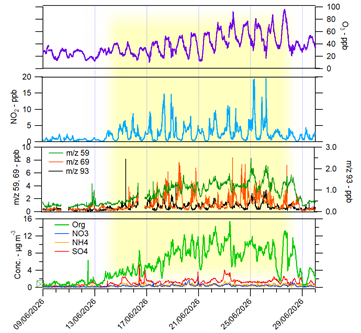
At SIRTA laboratory, in the Île-de-France region, the data reveal a gradual and marked increase in concentrations of particulate organic matter, characterised by daily cycles typical of the behaviour of the factors influencing these compounds (emissions, transformations, atmospheric dynamics) (Figure 5). Although daily concentrations are abnormally high – sometimes 90 per cent above the average for previous years – they have not yet broken historical records. This increase suggests conditions favourable (notably high temperatures and atmospheric stability) to biogenic emissions and the formation of secondary organic aerosols. Indeed, an increase in VOCs (precursors of ozone and secondary organic aerosols) has been observed during this episode, including both biogenic compounds such as isoprene and compounds resulting from the evaporation of anthropogenic sources. This heatwave also leads to a gradual increase in ozone levels, which are formed photochemically through non-linear processes involving VOCs, NOx and atmospheric oxidants.
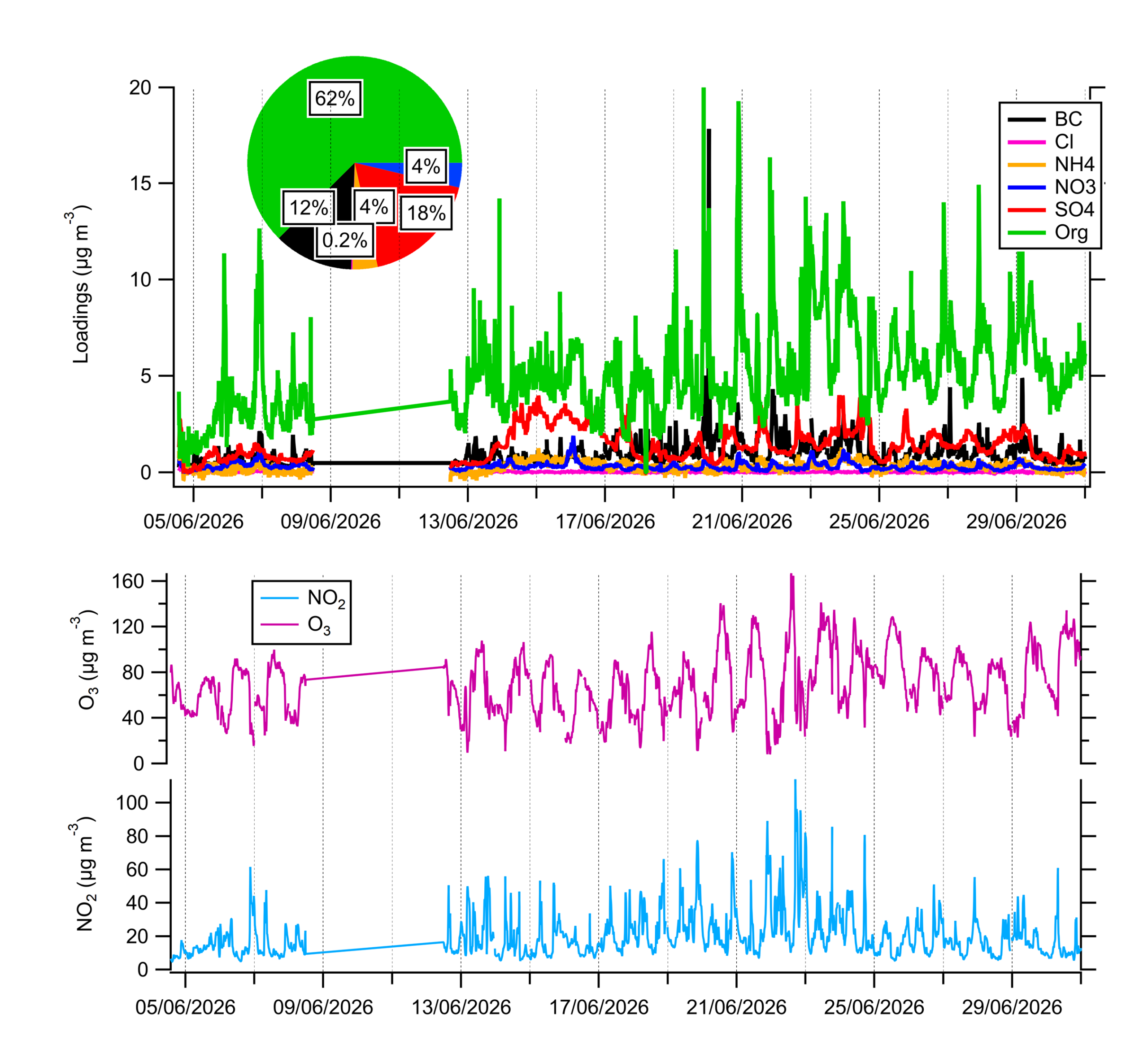
At another site, the Marseille-Longchamp urban site (MRS-LCP), particulate matter (PM₁) concentrations remained in line with the levels typically observed for this time of year, but with the organic fraction predominating, accounting for 62 per cent of the mass of PM₁ (Figure 6).
Factor analysis of these data shows that, during the heatwave, there was a gradual increase in the contribution of secondary organic aerosols (SOA), which accounted for up to 85 per cent of total organic aerosols – that is, more than half of the composition of fine particulate matter.
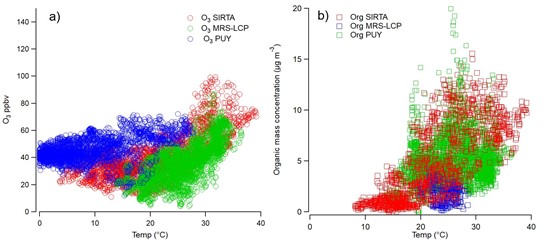
Measurements of organic aerosol concentrations were also carried out at the high-altitude site on the summit of the Puy-de-Dôme (1,465 m), which is less affected by the heatwave and urban emissions. These parallel measurements enable us to highlight the significant impact that temperature rises can have on the formation of SOA and ozone, despite variations in air masses and precursors.
A comparison of measurements taken at several sites revealed that this episode had a particularly marked impact on ozone and secondary organic aerosols (SOA), highlighting regional disparities in its intensity (Figure 7).
One of the consequences of this episode was a deterioration in air quality. Tropospheric ozone is the main cause of it; it is formed photochemically through a complex cycle from precursor pollutants such as volatile organic compounds (VOCs) and nitrogen oxides (NOx). During this heatwave, some readings taken at the SIRTA site approached 100 ppbV, which is close to the regulatory standards relating to human health.
Seasonal CO₂ anomaly in Europe observed by ICOS
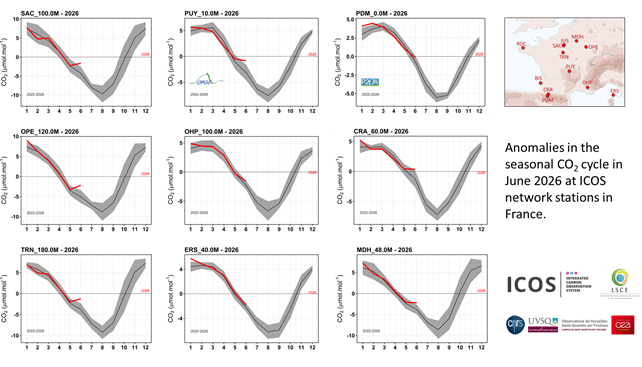
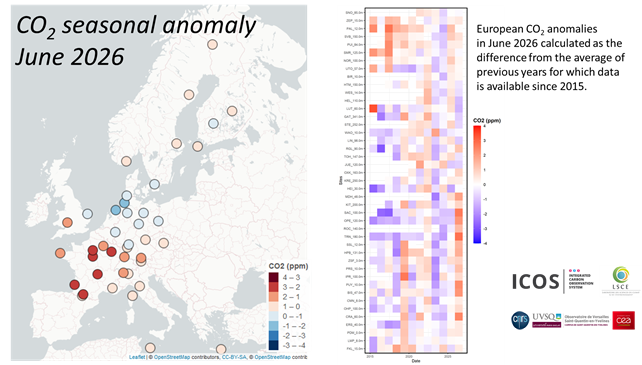
As shown in Figure 8, the seasonal decline in atmospheric CO₂ between March and September reflects carbon uptake through photosynthesis in various terrestrial ecosystems. The average figures for June 2026 recorded at several French stations indicate an unprecedented anomaly in this seasonal cycle since measurements began in 2015, reflecting a decline in carbon uptake by terrestrial ecosystems. These preliminary measurements will be supplemented by CO₂ flux measurements carried out at several ICOS-Ecosystem sites, and the magnitude of the anomaly in carbon fluxes will be estimated using atmospheric inversion.
These recurring heatwaves highlight the importance of monitoring changes in the chemical composition of the summer atmosphere in order to assess their consequences. Cross-analysis of data collected at the AERIS data centre and from atmospheric observation research facilities and geostationary satellites offers great potential for scientific analysis and for assessing the impacts of increasingly frequent extreme events.
Find further articles describing this episode in the Île-de-France region: